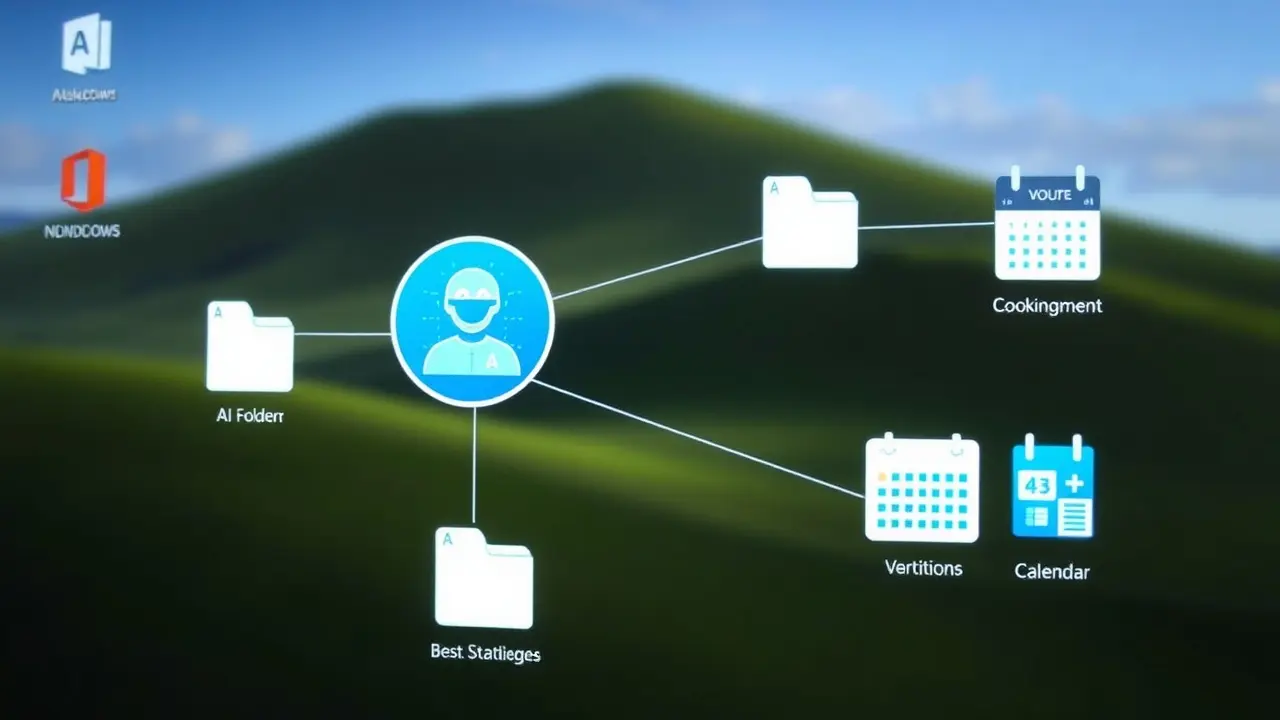
Quick answer: MCP (Model Context Protocol) is an open standard for connecting AI models to external tools and data sources through a consistent interface, rather than building a bespoke integration for every pairing. For businesses, the practical benefit is that an AI assistant can securely reach your systems — CRM, database, files — without a custom connector for each one.
MCP: Connect AI Agents to Tools via Model Context Protocol
In the evolving market of artificial intelligence, the Model Context Protocol (MCP) emerges as a pivotal technology, streamlining how AI agents interact with external tools and data sources. This protocol is essential for businesses aiming to use the full potential of AI by enabling clean integration between AI systems and existing business systems through Claude. MCP provides a standardized way for AI agents to access a wide range of functionalities, significantly enhancing their capabilities and efficiency.
Understanding MCP and Its Role in AI Integration

What is MCP?
MCP, or Model Context Protocol, is a standardized protocol designed to facilitate clean integration between AI agents and various tools and data sources. It provides a unified framework that allows AI agents to access external resources, execute tasks, and retrieve information in a consistent manner. MCP support is critical for enabling AI integration across different platforms and systems. By using MCP, developers can streamline the process of connecting AI applications with external tools, fostering innovation and enhancing the capabilities of AI-driven workflows. The Model Context Protocol is a key component in the future of AI, enabling more sophisticated and integrated AI solutions.
Key Components of the Model Context Protocol
The Model Context Protocol comprises several key components that work together to ensure efficient AI integration. The MCP client, embedded within the AI agent, handles the communication with the server, allowing it to query and execute tasks. MCP provides a standardized way to streamline custom integration.
| Component | Description of how AI agents leverage the MCP protocol for enhanced functionality. |
|---|---|
| MCP Server | Acts as a central hub, managing connections between AI agents and external tools, enhancing the overall efficiency of the AI model. |
| Standardized Protocol | Defines the format for requests and responses, ensuring interoperability between different systems. |
How MCP Connects AI Agents to Tools
MCP enables AI agents to access external tools and data sources through a well-defined and standardized protocol. Using MCP, AI agents can connect to remote MCP servers, which is useful for connecting AI. The AI assistant can then use these tools to execute specific tasks or retrieve relevant information in real-time, enhancing its overall performance and utility with Claude Desktop. Using MCP, agents and tools can communicate effectively, enabling complex workflows and automating tasks. This clean interaction is critical for various use cases, including AI development and business logic optimization.
- Customer support
- Data analysis can be significantly improved by deploying AI agents that utilize the MCP protocol.
- Process automation
By standardizing the way for AI agents to access tools like data sources and tools, MCP facilitates more efficient and scalable AI deployment.
Implementing MCP in Business Systems
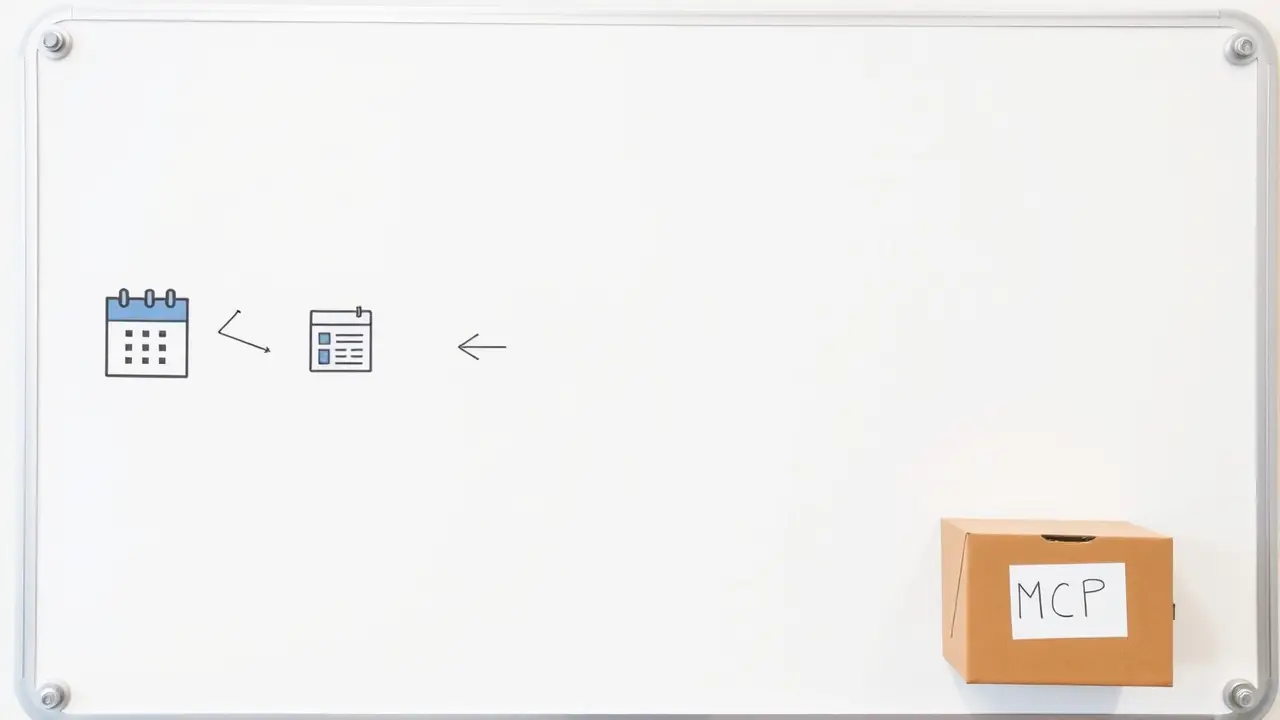
Using MCP to Enable AI in Business
The Model Context Protocol is reshaping how AI agents interact with business systems, and MCP support is growing. For businesses looking to enhance their operations, utilizing MCP to connect AI is a strategic move. Enable AI, MCP provides a standardized protocol to integrate AI into existing business tools. Specifically, MCP integration allows AI applications to:
- Access a wide range of functionalities.
- Optimize workflows and increase efficiency.
Consider how AI agents could alleviate your team's burden. Imagine using MCP to eliminate manual data entry and other repetitive tasks. By using MCP, you're not just adding AI tooling; you're streamlining operations and freeing up valuable time by integrating AI development processes. AutomateNexus can help with custom integration to see significant mcp integration in your company. They standardize the way for ai agents to access tools like they need.
Deployment of Remote MCP Servers
Deployment of remote MCP servers is a strategic move for businesses aiming to enhance their AI integration capabilities. By setting up remote MCP servers, organizations can centralize access to external tools and data sources for their AI systems. This approach streamlines the process of connecting AI agents to various functionalities, making it easier to scale AI-driven workflows. Using remote MCP servers also facilitates better control and security over AI operations, ensuring that sensitive data is handled appropriately. Using MCP for AI integration and agents to access data through these centralized servers is an excellent way to enable AI effectively.
Integration with Existing CRM Systems
Integration with existing CRM systems is a critical use case for the Model Context Protocol. By using MCP, businesses can connect AI agents to their CRM platforms, creating opportunities for enhanced automation and improved customer interactions. This integration enables AI applications to access customer data in real-time, empowering AI assistants to provide personalized support and tailored recommendations. AutomateNexus specializes in providing CRM integration and automated lead flow by connecting AI agents and utilizing LLM capabilities. A key benefit is streamlining lead management. They standardize the way for AI agents to access information. By implementing MCP, these AI agents can enhance their overall efficiency.
Use Cases for MCP

Connecting AI Assistants to External Tools
The Model Context Protocol significantly enhances the capabilities of AI assistants by enabling them to cleanly connect to external tools. AutomateNexus offers AI-powered chatbots that handle initial customer interactions, qualify leads, and schedule appointments, allowing AI agents to improve their performance. By using MCP, these AI agents can access and execute specific tasks using external tools, such as appointment scheduling software or CRM systems, ensuring 24/7 availability and efficient appointment booking. This integration not only streamlines workflows but also enhances the responsiveness and effectiveness of AI customer support, making MCP support and custom integration valuable for any company.
Real-Time Data Access and Management
Real-time data access and management is another crucial use case for the Model Context Protocol. AutomateNexus creates automated dashboards and reports that provide real-time insights, eliminating the need for manual report generation and significantly improving decision-making processes. With MCP, AI agents can connect to various data sources and tools, including self-updating reports in Power BI and Tableau, as well as custom integration to other business tools. This integration ensures that AI systems have access to the most current information, allowing AI agents to provide accurate and timely recommendations, and enabling businesses to respond quickly to changing market conditions. Using MCP for automated dashboards can reshape your company.
Standardizing AI Tooling with MCP
Standardizing AI tooling is essential for maintaining efficiency and scalability in business systems, and the Model Context Protocol provides a powerful solution for achieving this goal. By implementing MCP to connect AI, organizations can standardize the way for AI agents to access various external tools, ensuring consistent performance and reducing the complexity of AI integration. This standardized protocol simplifies the process of connecting AI agents to different systems, allowing AI agents to cleanly interact with a wide range of functionalities. AutomateNexus excels in custom integration, making it easy to implement MCP support for various AI models. In the future of AI, having an AI assistant through an API will allow for increased overall efficiency. MCP provides the framework for a scalable AI integration.
The Future of AI with Model Context Protocol

Potential Enhancements in AI Agent Capabilities
The future of AI is intertwined with the ability of AI agents to cleanly integrate with a multitude of external tools. MCP provides the architecture to support these sophisticated interactions. With the Model Context Protocol, we can anticipate significant enhancements in the way AI systems operate. AI agents will access advanced features and execute complex tasks across various business systems, powered by the latest AI model. This evolution involves refining the APIs through which AI agents query information, ensuring real-time responses and accurate data management. Enhanced MCP support means allowing AI agents to become more autonomous.
Real-Time Collaboration across Tools
One of the most promising aspects of the Model Context Protocol is its capacity to facilitate real-time collaboration across different tools like data sources and servers connect. Businesses often rely on a diverse set of business tools, from CRM systems to data analytics platforms. Using MCP, AI agents can coordinate tasks and share information across these disparate systems, creating more streamlined workflows. For instance, an AI assistant could automatically update customer records in a CRM system based on data extracted from a marketing automation platform, ensuring consistency and accuracy. MCP can connect AI and allows users to utilize AI tooling.
Building an AI Ecosystem with MCP
The long-term vision for the Model Context Protocol extends beyond individual integrations. It envisions a thriving AI integration ecosystem where AI agents can easily discover and connect to a wide array of external tools and services. This scalable approach streamlines AI tooling. By standardizing the way for AI agents to access these resources, MCP fosters innovation and accelerates the deployment of AI applications. This cohesive ecosystem is crucial for enabling AI in diverse sectors, from healthcare to finance. Businesses can use the MCP server or remote MCP servers to achieve this. Through custom integration, MCP provides a standardized protocol.
Connecting a model to your systems is straightforward; deciding what it should be allowed to touch is the part that needs care. We will work through both in a free integration review.
Frequently asked questions
What problem does the Model Context Protocol solve?
It replaces bespoke integrations with a consistent interface. Without a standard, every pairing of an AI model and a tool needs its own connector, which does not scale as either side multiplies. MCP gives AI agents one standardized way to access external resources, execute tasks and retrieve information, so connecting a new system becomes a configuration problem rather than a development project.
How does an AI agent actually reach my systems through MCP?
The MCP client sits inside the AI agent and handles communication with the server, letting the agent query information and execute tasks. Through that connection the agent reaches external tools and data sources in real time and acts on what comes back. Because the interface is standardized, the same agent can talk to several systems without a different integration approach for each one.
What is a remote MCP server used for?
A remote MCP server centralizes access to external tools and data sources for your AI systems, rather than wiring each agent to each system individually. That makes AI-driven workflows easier to scale, since new capabilities are added in one place. It also gives you better control and security over AI operations, which matters most when the data flowing through those connections is sensitive.
Can MCP connect an AI assistant to my CRM?
Yes, and it is one of the clearest use cases. Connecting agents to a CRM lets them access customer data in real time, which is what makes personalized support and tailored recommendations possible rather than generic. The same connection supports automated lead flow and lead management, since the agent can both read the record and write the result back into the system of record.
What are the common business use cases for MCP?
Customer support, data analysis and process automation are the recurring three. In practice that looks like chatbots handling initial interactions, qualifying leads and scheduling appointments; dashboards and reports that update themselves instead of being assembled by hand; and eliminating manual data entry between systems. The value comes from the agent being able to act inside your tools, not just describe what should happen.
How do I control what an AI agent is allowed to touch?
Connecting a model to your systems is straightforward; deciding what it should be allowed to reach is the part that needs care. Routing access through centralized servers rather than ad-hoc connections is what makes that decision enforceable, giving you control over AI operations and ensuring sensitive data is handled appropriately. Decide the boundaries before the integration, not after the agent is already running.
Why does standardizing AI tooling matter?
Standardizing how agents reach tools gives you consistent performance and reduces the complexity of every future integration. Without it, each connection has its own conventions, failure modes and maintenance burden, and the total cost grows faster than the capability does. A standard interface is also what makes an ecosystem possible, where agents discover and connect to services rather than being wired to them individually.