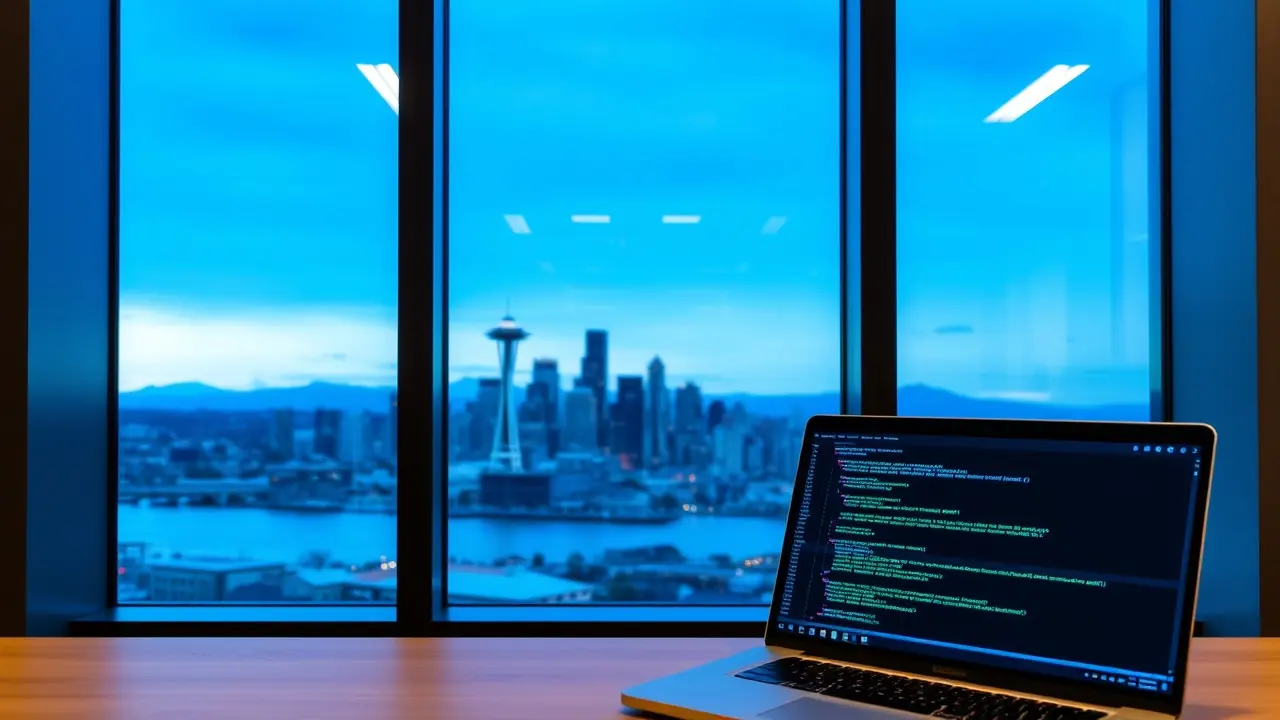
Quick answer: AutomateNexus is headquartered in Seattle and works with businesses here and nationwide. For local companies, that means the option of meeting in person alongside the same model we offer everywhere: a one-time build you own outright, delivered in about 30 days, with no monthly platform fee and no vendor lock-in.
AI Agency Seattle: AI Automation & Workflow Solutions
In the bustling heart of the Pacific Northwest, Seattle businesses are rapidly discovering the transformative power of artificial intelligence. At AutomateNexus, we specialize in crafting and deploying bespoke AI solutions designed to automate workflows, optimize operations, and drive unparalleled growth for our clients. As a leading AI agency in Seattle, we are dedicated to helping you navigate the complexities of AI and harness its potential to revolutionize your business.
Understanding AI and Its Impact on Seattle Businesses

What is AI?
Artificial intelligence, at its core, is the simulation of human intelligence processes by computer systems. It encompasses a wide range of AI technologies, including machine learning, natural language processing, and computer vision, which are crucial for developing effective AI agents. AI systems are designed to learn, reason, and solve problems, enabling them to automate tasks, analyze data, and make predictions with remarkable accuracy. For Seattle businesses, understanding AI is the first step towards unlocking its immense potential for workflow automation and optimization through partnerships with AI consultants.
The Importance of AI in Modern Business
In today's competitive landscape, AI is no longer a luxury but a necessity. For Seattle businesses, AI adoption offers a significant edge by streamlining operations, reducing costs, and enhancing customer experience. Workflow automation, powered by custom AI solutions, can free up valuable time and resources, allowing your team to focus on strategic initiatives and innovation. Implementing AI can lead to data-driven decisions through powerful analytics, providing a clear path towards improved ROI and sustainable growth.
Overview of AI Adoption in Seattle
Seattle's vibrant ecosystem, fueled by tech giants and innovative startups, is witnessing rapid AI adoption across various sectors, including biotech and technology. The University of Washington's pioneering AI research contributes significantly to the region's status as a hub for AI innovation. From AI-powered chatbots enhancing customer inquiries to automation systems streamlining data entry, Seattle businesses are leveraging AI to optimize workflows and gain a competitive advantage. Choosing the right AI consulting firm is crucial for seamless integration and successful AI implementation.
AI Automation: Transforming Workflow Solutions
Defining AI Automation
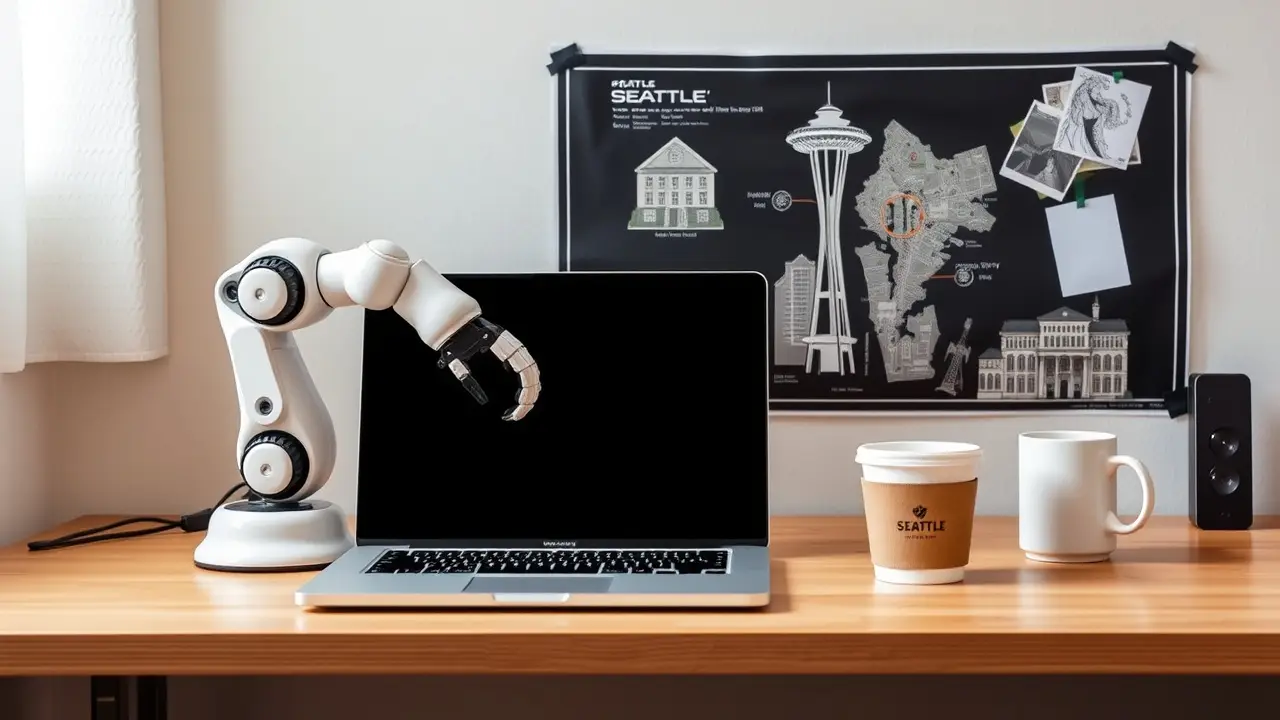
AI automation, as implemented by an like AutomateNexus, involves using to and enhance business processes. AutomateNexus, an and consulting focused on, specializes in eliminating through workflows. This means identifying and implementing that leverage open-source tools, ensuring without compromising quality. The aim is to create that drive efficiency and reduce operational overhead, allowing businesses to thrive in the competitive.
Benefits of Workflow Automation with AI
The benefits of with are substantial, especially for. These are designed to save businesses over 20 hours per week by eliminating manual, allowing CMOs to reallocate their teams to revenue-generating activities. With from AutomateNexus, businesses can eliminate busywork, reduce operational costs, and enable scalable growth. A free audit can pinpoint high-ROI automation opportunities, ensuring that your strategy aligns with strategic goals.
Case Studies: Successful AI Automation in Seattle
AutomateNexus demonstrates a proven track record in through various case studies of successful. One notable example is d inventory management for e-commerce businesses. Another instance is the of smart factory for defense manufacturing. These examples highlight the practical application of and its potential to transform industries within. Such transformations underline the importance of for sustained success.
Choosing the Right AI Agency in Seattle
Top AI Consulting Firms in Seattle
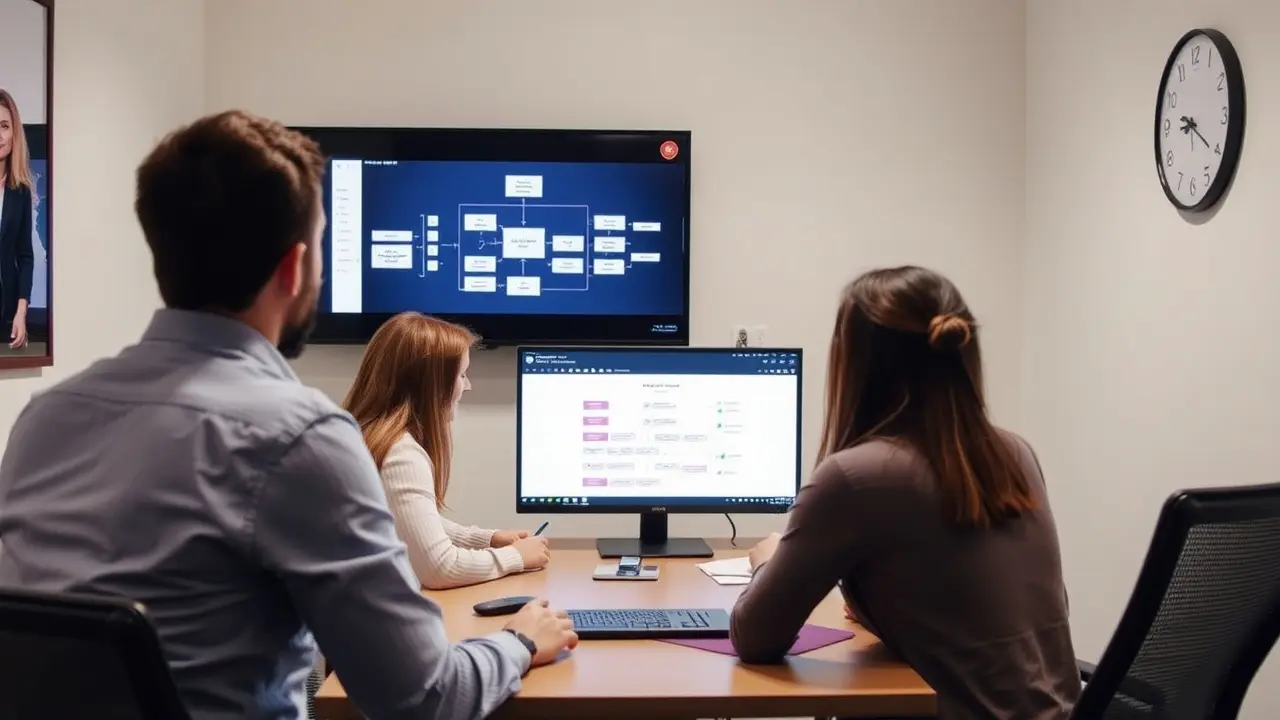
When selecting an, it's crucial to consider firms that offer tailored to your business needs. AutomateNexus stands out as a premier and specializing in serving small businesses. AutomateNexus leverages technical expertise to provide efficient and cost-effective automation solutions, thus enabling businesses to optimize operations and drive growth. Selecting one of the ensures access to expertise and innovative.
Evaluating AI Experts and Consultants
Evaluating and involves assessing their, understanding of various, and ability to deliver aligned with your business goals. Look for consultants with a proven track record in, including successful of systems. Ensure they have a deep understanding of and can provide insights through and custom. The ability to provide improvements through AI agents is also critical in the automation process.
Criteria for Selecting an AI Agency
Selecting the best AI consulting agency requires careful consideration of several criteria, including technical expertise and experience. A key aspect is their approach to partnership and their ability to provide insights, with at the forefront. Look for agencies that prioritize understanding your unique needs and crafting that deliver tangible results. An automation agency like AutomateNexus, a veteran-owned and mission-driven company, emphasizes these values, ensuring that the implementation aligns with your strategic objectives and provides a clear path to success.
Implementing AI Solutions for Your Business
Steps for Effective AI Implementation
Here's how AutomateNexus guides Seattle businesses through AI implementation, offering a structured approach that covers several key stages:
- Deep dive to discover inefficiencies: We begin by thoroughly examining your existing workflow to identify potential automation opportunities.
- Design custom AI solutions: Next, we create automated systems specifically tailored to your unique needs.
- Build and rigorously test automation systems: We ensure optimization and reliability through thorough testing.
- Provide comprehensive team training: Ensuring seamless integration after deployment is a priority.
- Continuously monitor and optimize performance: We focus on a strong ROI and sustained benefits from your AI adoption.
Measuring ROI with AI Solutions
Measuring is paramount when investing in. AutomateNexus provides and custom solutions to track the performance of your initiatives. By monitoring key performance indicators (KPIs) such as time saved, cost reductions, and revenue increases, you can quantify the tangible benefits of your. Our approach ensures that you have clear visibility into the value generated by our systems, making it easy to justify your investment and demonstrate the effectiveness of our.
Common Challenges in AI Adoption and Solutions
Here are some of the challenges often encountered when adopting AI. We tackle these challenges head-on, especially issues like:
- Initial resistance to change from employees, which we address through thorough training and clear communication.
- Ensuring seamless integration with existing systems, which we handle by crafting custom solutions.
Data security is also a top concern. Our AI agency employs robust security measures to protect your data throughout the AI implementation process.
Future of AI in Seattle
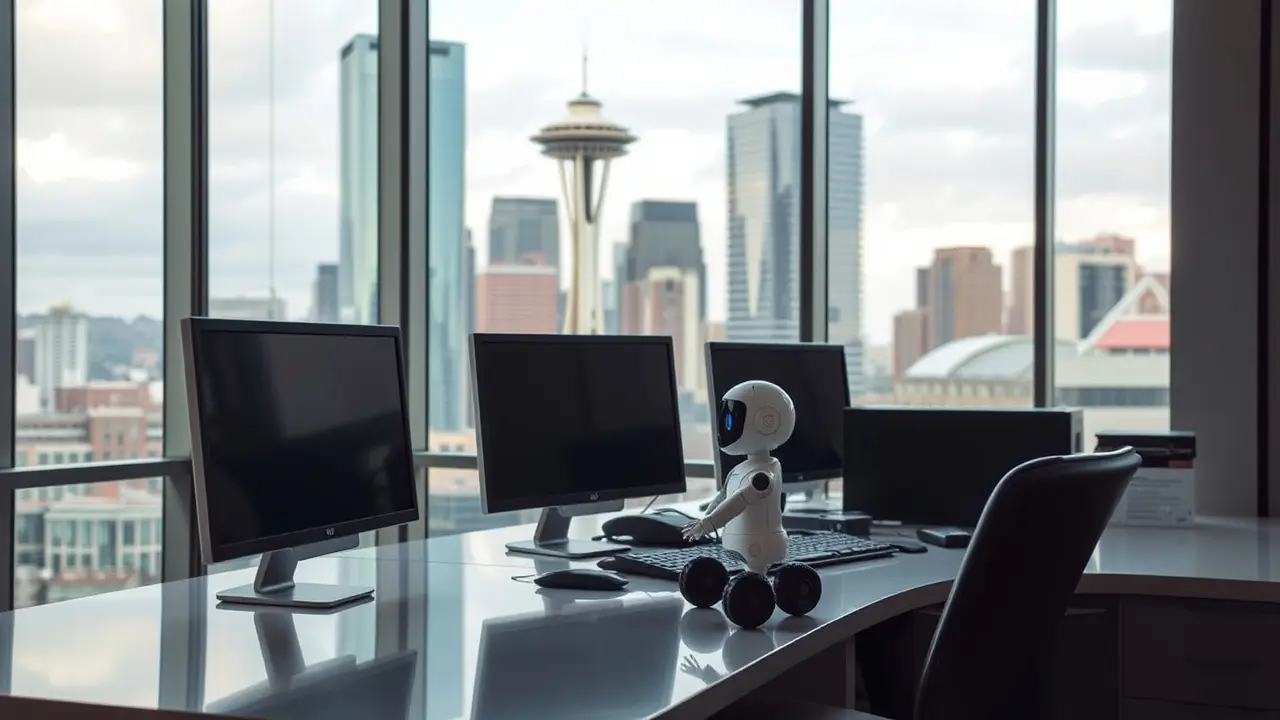
Emerging Trends in AI Development
The future of AI in Washington State is dynamic, driven by cutting-edge technology at the University of Washington and the presence of numerous companies. Emerging trends include advancements in natural language processing (NLP), enabling more sophisticated and communication tools. There's also significant progress in computer vision, leading to more advanced for various industries. As a, AutomateNexus stays at the forefront of these trends, ensuring that our clients have access to the most innovative.
Leading AI Applications for Businesses
AI applications are transforming Seattle businesses across sectors. AutomateNexus offers a range of AI-powered solutions, making it one of the best AI consulting agencies in Washington State. These automation solutions streamline operations, enhance customer experience, and drive significant ROI. By leveraging these AI technologies, businesses can gain a competitive edge and achieve sustainable growth.
| AI Solution | Functionality |
|---|---|
| AI Workflow Automation is key to reducing repetitive tasks and improving overall efficiency. | Streamlines operations |
| AI Chatbots | Enhance customer experience through targeted automation opportunities that streamline repetitive tasks. |
| CRM Automation | Personalizes customer interactions |
The Role of AI in Seattle's Economic Growth
is playing a pivotal role in 's economic growth, solidifying its position as a global hub for innovation. As AI technologies become increasingly prevalent, they become more efficient, competitive, and attractive to investors in Washington State. This creates a positive feedback loop, attracting more talent and investment to the region. The will continue to thrive. The presence of like AutomateNexus ensures that businesses have the resources they need to harness the power of, contributing to the region's continued prosperity.
Q: How can an AI Agency in Seattle help me automate my workflows and transform your Seattle business?
A: An AI agency Seattle: AI Automation & Workflow Solutions evaluates your current processes and designs ai-powered automation to reduce manual work, cut errors, and accelerate throughput. We create an ai strategy, integrate custom ai agents and ai systems with your existing tools, and deliver dashboards for monitoring. Our approach focuses on custom ai solutions tailored to your automation needs so businesses in Seattle see measurable ROI and sustainable transformation.
Q: What ai services should Seattle businesses look for when choosing the best ai consulting or ai firms?
A: Top talent ai firms and the best ai consulting providers offer a range of ai services including ai strategy, data engineering, custom ai agents, ai integration, and deployment of ai models for production. Look for vendors experienced with applied ai, devops automation, and building ai chatbots or ai voice systems. Proven case studies in seattle healthcare, Port of Seattle logistics, or companies in South Lake Union are strong indicators of capability.
Q: Can you explain how custom ai agents and ai systems work together to solve complex ai automation needs?
A: Custom ai agents are specialized models or orchestrations that perform tasks—such as customer support, scheduling, or anomaly detection—while ai systems refer to the entire stack: data pipelines, models, APIs, and dashboards. When integrated, agents automate specific workflows and the system ensures reliability, scaling, monitoring, and continuous improvement. This combination handles advanced ai and complex ai requirements across departments.
Q: What does deployment and ai integration look like for seattle businesses typically moving from pilot to production?
A: Deployment begins with pilot projects that validate performance on a narrow use case. Next comes production-grade ai integration: hardened ai models, CI/CD for model updates, secure APIs, and a monitoring dashboard. We follow applied ai best practices, collaborate with devops automation teams, and ensure compliance for sectors like seattle healthcare or logistics at the Port of Seattle. This staged approach minimizes risk and accelerates adoption.
Q: Are there specific ai tools or platforms recommended for companies that want to automate with cutting-edge ai in Seattle?
A: Recommended tools vary by objective, but common components include model frameworks, MLOps platforms, conversational ai toolkits for ai chatbot and ai voice, and analytics dashboards. We often combine open-source models with proprietary integrations, and sometimes partner with research groups like the Allen Institute for AI for advanced ai research. The right stack supports custom ai solutions tailored to your data and automation needs.
Q: How much does it cost for an AI Agency Seattle to build custom ai solutions tailored to my company in South Lake Union or other Seattle neighborhoods?
A: Costs depend on scope: simple ai-powered automation or an ai chatbot can be completed with modest budgets, while complex ai systems and full ai strategy engagements require larger investments for data work, model development, and devops automation. We provide phased pricing—proof of concept, MVP, and enterprise rollout—so seattle businesses can manage risk and scale according to value realized.
Q: What measurable benefits do businesses that adopt ai usually see, and how quickly can an agency deliver results?
A: Businesses that adopt ai typically see faster response times, reduced operational costs, higher accuracy, and improved customer satisfaction. Early wins such as automated ticket routing or a sales lead scoring dashboard often emerge within weeks to months; enterprise automation solutions and advanced ai can take several quarters. Agencies focus on KPIs tied to revenue, cost savings, and user adoption for clear measurement.
Q: How do I choose between multiple ai consultancies and ensure the partner can handle complex ai and advanced ai projects?
A: Evaluate consultancies on technical depth (experience with ai models, MLOps, and custom ai agents), industry experience in Seattle, client references, and ability to deliver ai integration and dashboards. Ask for examples of applied ai and devops automation, evidence of top talent, and approaches to governance and security. A trusted partner will offer a clear ai strategy roadmap and demonstrate success with seattle businesses or similar sectors.
Seattle is our home market, which means local companies can meet us in person on the same terms we offer nationwide — full details on our Seattle AI automation page. Wherever you are based, the starting point is the same: a free audit of the workflow you want fixed.