Make Automation · Menasha, WI · Winnebago County
Make Automation in Menasha, Wisconsin.
Make.com scenarios designed, built, and maintained — visual automation with professional engineering discipline. Built for Menasha businesses — remotely, in 30 days, on a stack you own outright.
Build fee
One-time · $7,500
Ongoing
$30–$150/mo (AI direct)
Live in
30 days
Ownership
Yours, forever
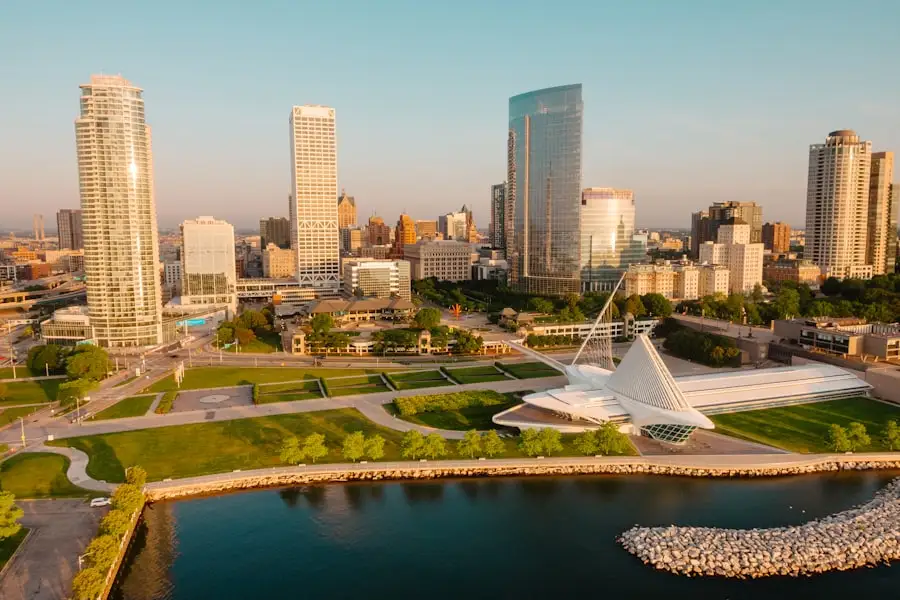
/ Menasha, WI
Menasha (pop. ~18,000) sits in Winnebago County, WI about 30 miles from Green Bay. We build Make automation for Menasha businesses remote-first — the same one-time build, 30-day timeline, and BYOK pricing whether you're local or in a larger Wisconsin market like Milwaukee. Your location never changes the price or who owns the result (you do).
Why us
Why Menasha businesses choose us for Make automation
One-time build. You own Make.com scenarios.
Certified scenario design
01Error handling, routers, and data stores done right — scenarios that survive contact with real-world data.
1,500+ app integrations
02If your stack connects to Make, we'll wire it together — CRM to accounting to ops without code.
Cost-efficient operations
03Scenario architecture tuned to minimize operations usage — same automation, smaller Make bill.
Documented & owned
04Every scenario mapped and documented. Your team can read, run, and modify everything we build.
From $7,500
ONE-TIME BUILD FEE
Not a subscription, not per-seat. One fee, then the system is yours.
30 days
DISCOVERY TO LIVE
A focused first build, in production in about a month.
Day 1
YOU OWN EVERYTHING
Workflows, credentials, documentation. Walk away and it keeps running.
Use cases
Make Automation use cases, in practice
CRM & sales pipelines
01Leads from forms, ads, and calls unified into your CRM with enrichment and routing.
E-commerce operations
02Orders, inventory, fulfillment, and notifications synced across your Menasha storefront and back office.
Finance workflows
03Invoices, expenses, and reconciliation flowing between billing and accounting automatically.
Cross-app reporting
04Data pulled from every tool into clean dashboards and scheduled digests.
Five phases. Thirty days to live.
Our process →01
Discover
Ops audit, process maps, ROI ranking.
02
Design
Architecture and tool picks — approved first.
03
Build
Constructed and tested against every edge case.
04
Launch
Deployment, training, real adoption.
05
Optimize
Monitoring, monthly reports, new wins.
Further reading
Worth reading first
Questions
Make Automation in Menasha — FAQ
Is there an automation company near me in Menasha?
Yes. AutomateNexus is a veteran-owned AI automation company serving Menasha and the surrounding area — Neenah, Appleton, Kimberly, Combined Locks and nearby. Delivery is remote-first, so there is no travel premium and no waiting for a local visit: discovery, build reviews and training happen over video, and most builds go live in about 30 days.
What does Make automation cost in Menasha?
A typical build starts at a one-time $7,500, and your only ongoing cost is the AI model provider — usually $30–$150/month, paid directly. No subscription, no retainer. How fast a build pays back depends on what the manual process costs you today — our ROI calculator runs that math on your numbers.
Do you work with Menasha businesses remotely?
Yes — delivery is remote-first across Wisconsin. Discovery, build reviews, and team training happen over video, which keeps the 30-day timeline tight wherever you are in WI.
Who owns Make.com scenarios after launch?
You do — workflows, infrastructure, credentials, and documentation. We build on open-source tools with your own API keys, so your business is never locked into a vendor, including us.
How fast can we go live?
Most builds go live in about 30 days through five phases — Discover, Design, Build, Launch, Optimize — and simple single-workflow builds can ship in as little as five days through the pilot. Week one is process mapping with no code. Delivery is remote-first, so location does not change the timeline; a stable process and a responsive point of contact on your side are what keep it to 30 days.
Do you only serve Menasha, or other Wisconsin cities too?
We work with businesses across the Midwest Wisconsin — from Milwaukee and Madison to smaller towns statewide. Delivery is remote-first, so where you are doesn't change the price, the 30-day timeline, or who owns the Make automation build at the end (you do).
Keep exploring
Other services
Make Automation near Menasha
Where we go from here
Ready for Make automation in Menasha?
Thirty minutes, no pitch deck. We map your operations, find the friction, and show you where automation actually earns its keep. If there's no fit, we'll say so.
No subscription.
No lock-in.
No surprise invoices.
Or start smaller — the $500 pilot · strategy audit